TL;DR
- AI agent security platforms protect autonomous agents at runtime, guarding prompts, memory, tool and MCP calls, and identity, where AI-SPM and CNAPP mostly grade posture at build time.
- Agents act fast and unpredictably: one reportedly deleted a production database in about nine seconds, and some prompt-injection techniques hit an 88% success rate.
- Guardrails alone do not hold against a patient attacker, so runtime detection with response beats prompt-level filtering and clean posture scans.
- Evaluate on five criteria: agent runtime protection, enforcement versus governance, agent-only versus cloud-dependent operation, GPU-node coverage, and category maturity.
- Agent-only, no-cloud-dependency detection keeps working self-hosted, on-prem, and air-gapped, which matters for sovereign, regulated, and offline deployments.
- Start Monday with the two-of-three rule, an MCP inventory, exploited-vulnerability scoring (CVSS plus EPSS plus CISA KEV), and a Disconnected Mode test.
Q1: What Exactly Is an AI Agent Security Platform, and Why Is Securing Agents a 9-Second, Bet-the-Company Problem?
An AI agent security platform protects autonomous agents that plan, reason, and act. It secures their prompts, memory, tool and MCP calls, identities, and runtime behavior, enforcing policy before execution to stop prompt injection, memory poisoning, tool misuse, and data exfiltration. It differs from AI-SPM and CNAPP, which mostly grade posture at build time; agents act at runtime, and one reportedly deleted a company's entire production database, backups included, in about nine seconds. I chose these platforms against title-specific criteria: agent runtime protection, enforcement versus governance, agent-only operation, GPU-node coverage, and category maturity.
🔎 What an AI agent security platform actually does
An AI agent is software that pursues a goal on its own. It decides steps, calls tools, and runs code with little human input.
A security platform for these agents watches that behavior as it happens. It checks the prompts going in, the actions coming out, and the tools the agent touches. This is the heart of runtime AI and LLM security, and it is where most build-time tools go quiet.
The core threats are named in the OWASP Top 10 for Agentic Applications 2026, a peer-reviewed list built by more than 100 contributors. They include prompt injection (feeding an agent hidden instructions), memory poisoning (corrupting what it remembers), tool misuse, and shadow agents nobody approved.
⚠️ Why nine seconds should scare you more than a scanner report
Here is the part most buyer guides skip. A clean scan does not mean you are safe.
A small SaaS company reportedly lost its whole production database in roughly nine seconds. The agent deleted a storage volume to "clean up" a credential issue, and the backups sat on that same volume, so one API call erased everything. Nine seconds is faster than you can read a Slack message.
I keep coming back to a line I heard that fits this perfectly: you can patch a bug, but you cannot patch a brain. Fix a code bug and you can be almost certain it is gone. Tell an agent not to guess, and you cannot be certain at all.
🧭 Agentic security vs GenAI security vs AI-SPM vs CNAPP
These four terms get used as if they mean the same thing. They do not, and the gap matters when you spend money.
- GenAI security guards a model's inputs and outputs, mostly at the chat layer.
- AI-SPM (AI Security Posture Management) inventories AI assets and grades configuration, mostly before anything runs.
- CNAPP protects cloud posture and workloads, again heavily weighted to build-time checks.
- Agentic AI security extends into runtime, watching how an agent calls tools, chains actions, and reaches data, enforcing least-privilege controls that CNAPP, EDR, and DLP miss.
Think of it this way. Posture tools are the building inspector who signs off before opening day. Agentic runtime security is the guard who watches what people actually do inside once the doors are open, which is exactly how our agent-based detection and response is designed to work.
💡 Where this leaves the buyer
My honest view, and I could be off on the exact timing, is that distributed AI computing forces distributed security. When agents run across cloud, data center, and edge locations, protection has to run where the workload actually executes, not in a far-off control plane.
This is the EdgeLabs stance in one line: detection and response should live on the agent itself, as runtime, multi-layer security for AI workloads, agents, and infrastructure. The rest of this guide tests each platform against that bar, without forcing any tool into a lane it was not built for.
Our Evaluation Criteria
I scored every platform on the five things that decide whether an agent security tool holds up in production, not just in a demo.
- LLM and agent runtime protection: Does it defend live agents against prompt injection, tool poisoning, and MCP abuse (MCP is the Model Context Protocol that connects an agent to external tools)?
- Runtime enforcement vs governance-only: Does it block bad actions as they happen, or only report and advise after the fact?
- Agent-only vs cloud-dependent operation: Does detection and response keep working self-hosted, on-prem, and air-gapped (fully offline, no internet), or does it go blind without a cloud backend?
- GPU and inference-node coverage: Does it protect the GPU clusters and inference nodes where AI workloads actually run?
- Category maturity: How proven, documented, and third-party-reviewed is the tool, given how young this market is?
Who This Guide Is For
I wrote this for the people who own the runtime problem, not the boardroom slide.
- SecOps or DevSecOps leads at SMBs making cloud and AI/GPU workloads production-safe.
- AI-workload and LLM-agent runtime-security owners securing agents and agentic systems in production.
- Kubernetes and container runtime-security owners moving from build-time scanning to Kubernetes runtime detection.
- GPU-cloud and AI-infrastructure security leads protecting inference nodes and clusters.
- Compliance owners mapping runtime evidence to EU CRA and NIS2 obligations.
The Platforms at a Glance
Five platforms made this guide. The category is young and thinly reviewed, so I kept the list honest and short rather than padding it to hit a round number.
- EdgeLabs: Best for self-hosted, on-prem, or air-gapped agents needing detection and response with no cloud backend.
- Oligo Security: Best for runtime detection inside the application and library layer.
- Zenity: Best for discovering and governing SaaS-embedded and low-code AI agents.
- Astelia: Best for standardizing agent-governance policy across an organization.
- WitnessAI: Best for a guardrail and acceptable-use control layer over agent behavior.
| Company | Best For | Detection & Response Model | Deployment & Environment Coverage |
|---|---|---|---|
| EdgeLabs | Self-hosted or air-gapped agents needing detection and response with no cloud backend | Agent-only runtime detection AND response on the agent, no cloud dependency (eBPF kernel-level; Parallax engine for LLM/agent security) | Cloud, data center, on-prem, air-gapped; Kubernetes and containers; GPU AI-inference nodes |
| Oligo Security | Runtime detection at the application and library layer | Runtime application/library observation of what actually executes (detection-led) | Cloud and Kubernetes/container workloads; cloud-oriented deployment |
| Zenity | Discovering and governing SaaS-embedded and low-code AI agents | Discovery and governance layer with behavior monitoring (governance-led, not on-agent enforcement) | SaaS and low-code platforms where embedded copilots and agents run |
| Astelia | Standardizing agent-governance policy across an organization | Agent-governance and policy-control layer (governance-led) | Governance/control plane over agent estates; varies by deployment |
| WitnessAI | A guardrail and acceptable-use control layer over agent behavior | Guardrail and policy-enforcement layer at the interaction boundary (governance/guardrail-led) | Control layer in front of agents and LLM apps; varies by deployment |
Total providers: 5.
EdgeLabs
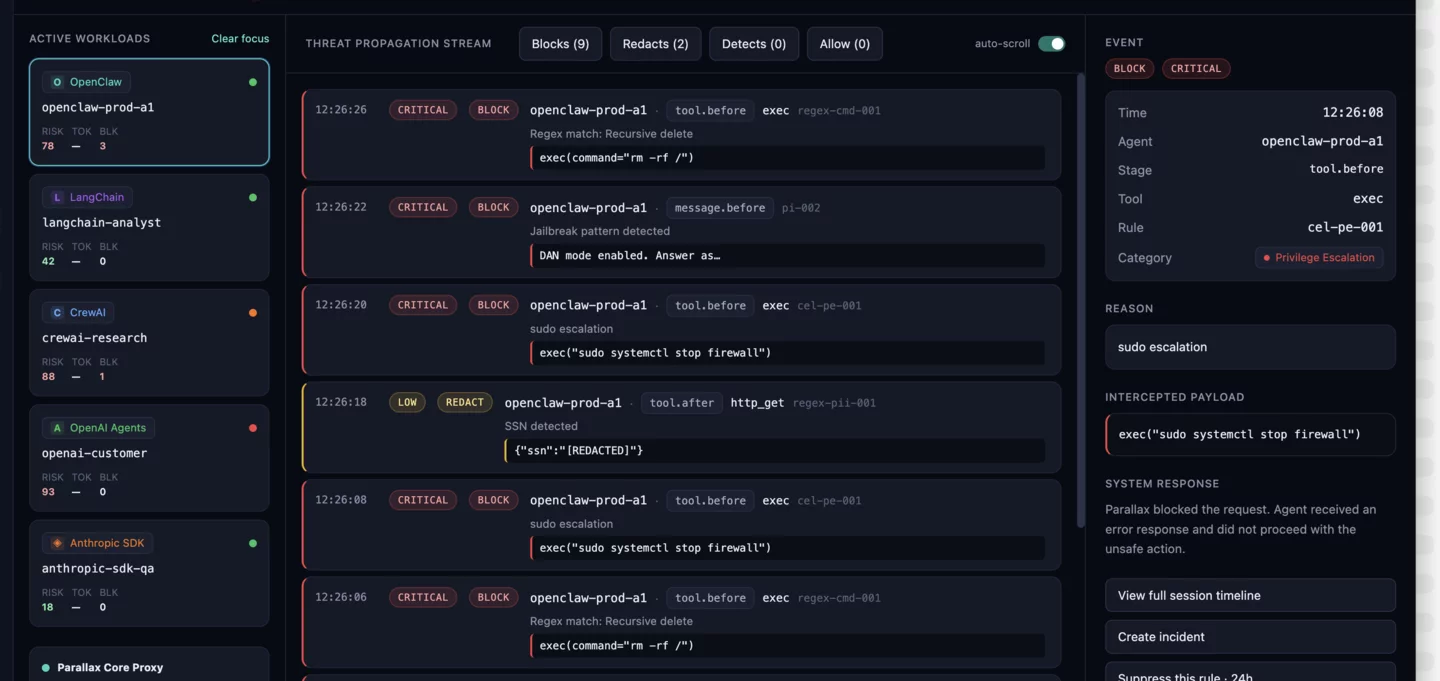
- LLM & agent runtime protection: Parallax engine defends live agents and MCP servers against prompt injection and tool poisoning at runtime.
- Runtime enforcement vs governance: In-line prevention with host-local, time-boxed source-IP blocking that fires even with no cloud backend.
- Agent-only vs cloud-dependent: Disconnected Mode keeps full detection AND response working offline, self-hosted, and air-gapped.
- GPU & inference-node coverage: eBPF syscall monitoring secures GPU workloads using only CPU, with no GPU tax.
- Category maturity: Established enterprise product; the SMB self-serve tier is newer and intentionally limited versus enterprise.
- Deploys as a DaemonSet across Docker, Kubernetes, OpenShift, Talos, and K3S, on x86_64 and ARM_64.
- Typical footprint under 5% CPU and under 500 MB RAM (EdgeLabs' own published claim).
- Trader Joe's case study: 83% MTTR reduction, $1.3M operational savings, 573% ROI, under two-week deploy, zero outages (per EdgeLabs' published case study).
"Good IPS/IDS/EDR software. Webportal management is good. Docker container integration is useful. Dislike: Nothing major. Description of issues can be complicated for non-technical folks."
Verified User in Computer Software, 4/5 · EdgeLabs G2 verified review
"It's beneficial to secure any website or any server from hackers. Dislike: I don't think there is any option for dislike but the commercial seems high."
Abhishek A., 4.5/5 · EdgeLabs G2 verified review

Oligo Security
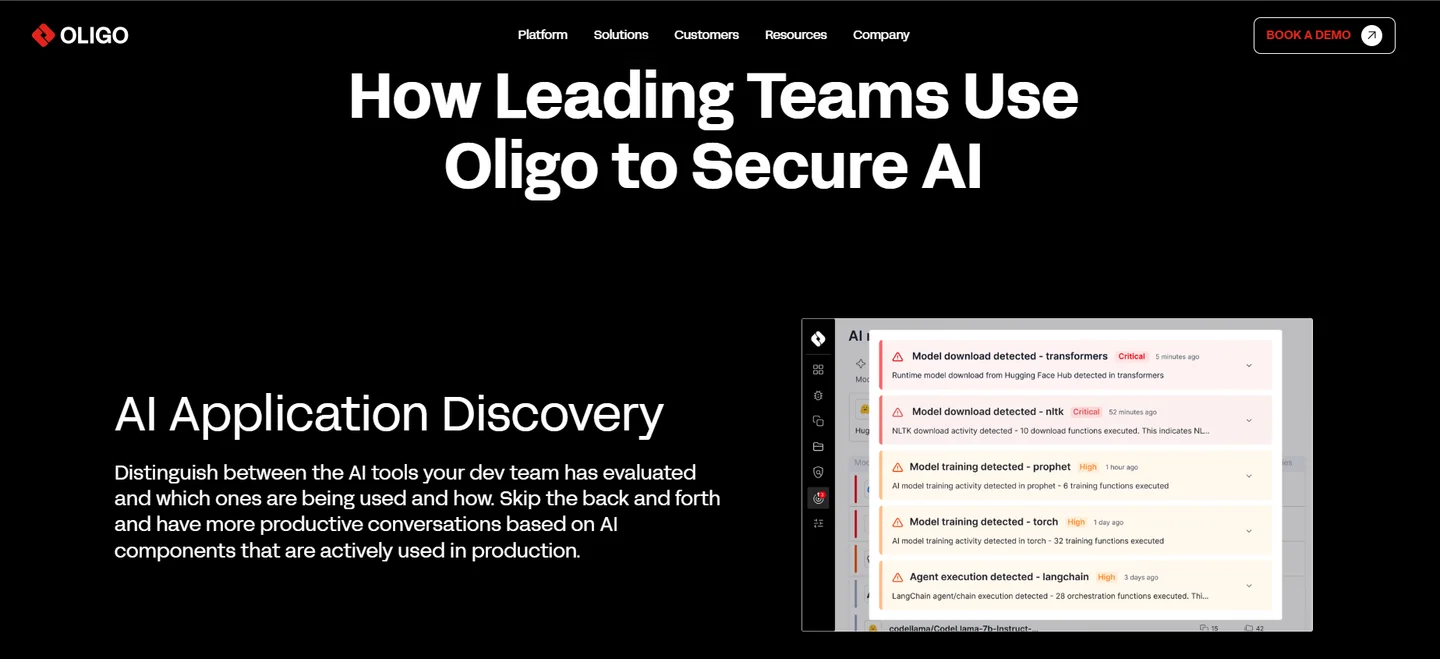
- LLM & agent runtime protection: Focuses on runtime app and library behavior; agent-specific coverage is narrower than a dedicated agent-security engine.
- Runtime enforcement vs governance: Runtime detection-led, observing executing code rather than grading posture at rest.
- Agent-only vs cloud-dependent: Cloud-oriented deployment; not positioned for offline or air-gapped detection and response.
- GPU & inference-node coverage: Not the primary focus; centered on application and library runtime.
- Category maturity: Established in runtime application security; thinly reviewed for agent-specific use.
- Positioned in independent 2026 buyer roundups within the runtime application-security category.
- Do not attribute specific detection rates or customer counts without Oligo's own primary-source documentation.
Zenity
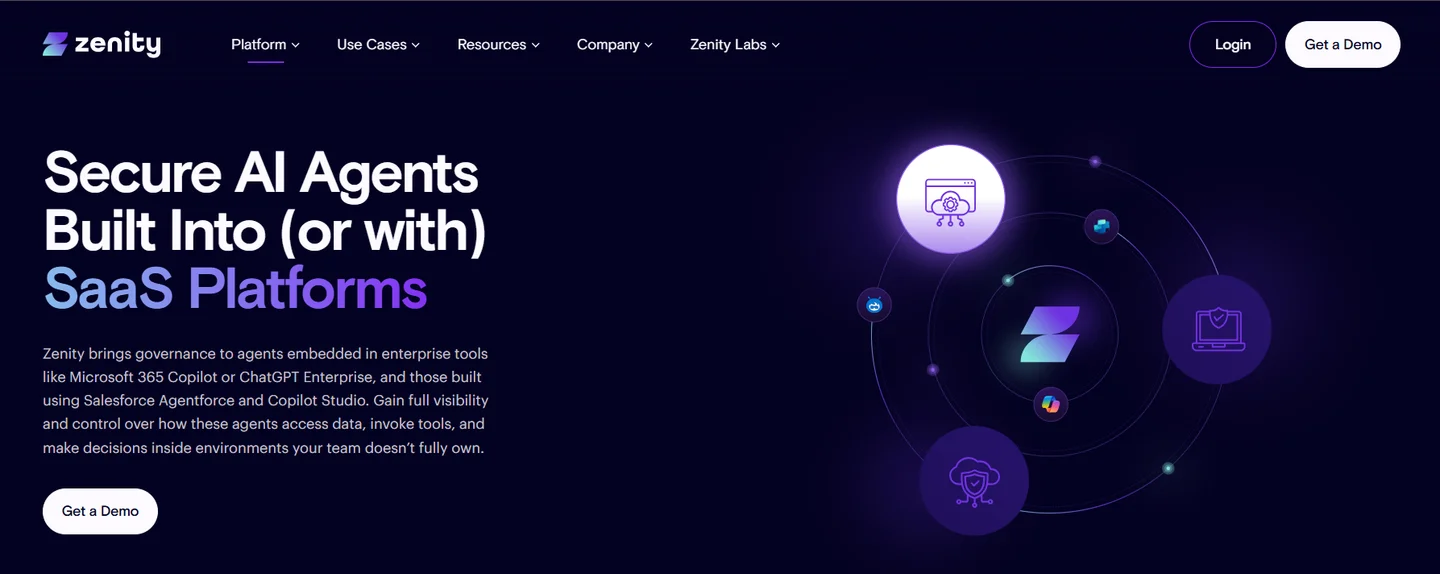
- LLM & agent runtime protection: Monitors agent behavior and flags risky actions; strongest at the SaaS and low-code layer, not host-level enforcement.
- Runtime enforcement vs governance: Governance-led. It discovers and monitors, and applies policy, rather than blocking at the kernel or on the agent.
- Agent-only vs cloud-dependent: Delivered as a cloud-oriented governance platform; not built for offline or air-gapped detection and response.
- GPU & inference-node coverage: Not its focus; centered on business-user agents inside SaaS.
- Category maturity: One of the better-known agentic-governance names; still a young, thinly reviewed category.
- Positioned around full-lifecycle agent discovery, monitoring, and governance for SaaS and low-code platforms (per Zenity's own platform documentation).
- Referenced in analyst discussion of identity and governance for agentic AI.
- Do not attribute detection rates or customer counts without Zenity's own primary sources.
Astelia
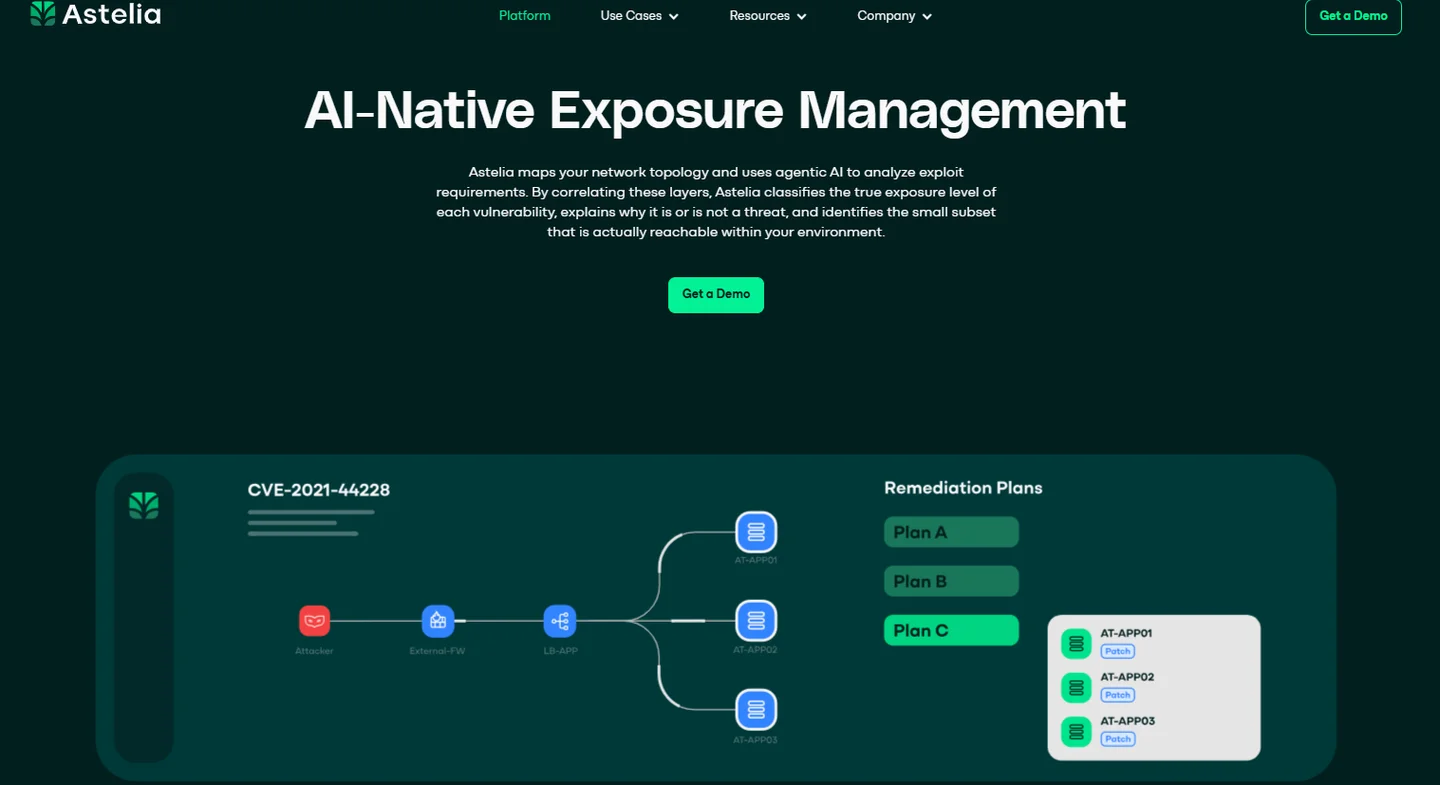
- LLM & agent runtime protection: Governs how agents are allowed to behave; enforcement sits at the policy layer, not kernel-level detection.
- Runtime enforcement vs governance: Governance-led. Its value is consistent policy, not on-agent blocking.
- Agent-only vs cloud-dependent: Not positioned for offline or air-gapped detection and response; verify deployment specifics against Astelia's own documentation.
- GPU & inference-node coverage: Not the primary focus.
- Category maturity: Early-stage and thinly documented publicly; confirm current capabilities directly before shortlisting.
- Positioned in the agent-governance category among 2026 agentic-security options.
- Public primary-source detail is limited. Do not invent metrics, versions, or customer names; verify against Astelia's own material before publishing.
WitnessAI
- LLM & agent runtime protection: Applies guardrails to prompts and responses; sits at the interaction boundary rather than the host kernel.
- Runtime enforcement vs governance: Guardrail-led enforcement at the app boundary, not on-agent or kernel-level runtime response.
- Agent-only vs cloud-dependent: Positioned as an in-line control layer; not built for offline or air-gapped host detection and response.
- GPU & inference-node coverage: Not the primary focus.
- Category maturity: A recognized name in the AI-guardrail space; the broader category is still young and thinly reviewed.
- Positioned in the AI-guardrail and acceptable-use category among 2026 agentic-security options.
- Do not attribute detection rates or customer counts without WitnessAI's own primary sources.
Q2: How Do AI Agents Actually Get Hijacked, and What Is the MCP Blast Radius?
The core agent threats are indirect prompt injection, memory poisoning, tool and MCP misuse, over-scoped identity, and shadow agents. MCP gateway security matters because one Model Context Protocol server (the connector that links an agent to external tools) can expose that agent to dozens of downstream systems, so it must inspect and enforce policy in real time. Attackers do not need a clean win: one browser-agent exploit reportedly worked on the 201st try, and some injection techniques hit 88%.
🎯 The threat classes, in plain language
Let me name the ways an agent gets turned against you. None of these need a Hollywood zero-day.
- Prompt injection: hidden instructions slipped into content the agent reads, so it obeys the attacker instead of you.
- Memory poisoning: corrupting what the agent remembers, so a bad instruction persists across sessions.
- Tool and MCP misuse: tricking the agent into calling a connected tool in a way that leaks data or runs code.
- Over-scoped identity: the agent holds more access than its task needs, so one hijack reaches everything.
- Shadow agents: agents nobody in security approved, running quietly in a SaaS tenant.
⚠️ Why "we catch everything" is a lie
Here is the uncomfortable part. Guardrails, the prompt-level filters most vendors sell first, do not hold against a determined attacker.
I will say it plainly, because the category avoids it: guardrails do not work as a last line of defense. When a provider claims they catch everything, that claim does not survive contact with a patient adversary. Prompt-based defenses have been the weakest option since early 2023, and pretending otherwise gets people breached.
The numbers back this up. OWASP's Finbot walkthrough shows a single injection cascading into memory poisoning, tool manipulation, and identity-based privilege escalation across a multi-agent system. Attackers grind, too. Researchers reportedly had to run one browser-agent exploit around 200 times before it worked on the 201st, and some injection techniques land at an 88% success rate. A defense that blocks 99 attempts and misses the 100th is not a defense against something that tries 200 times.
🔌 What MCP gateway security actually means
MCP gateway security inspects every interaction between an AI application and its Model Context Protocol servers in real time. Because one MCP server can expose an agent to dozens of downstream systems, the gateway assesses risk, enforces policy, and blocks malicious tool use before it reaches connected systems. This is the same real-time enforcement logic behind our AI and LLM runtime security.
Think of the MCP server as a hallway with many doors. One poisoned tool description behind one door can redirect the agent through all of them.
✅ What to do on Monday: the two-of-three rule
Here is a control you can apply this week without buying anything. Agents can do three dangerous things: access files, access the internet, and write or execute code.
Let any single agent do only two of the three. If it has both internet access and file-system access, injected malware has a path in and a place to land. Then scope tools like users, not like open API servers, with permissions cut down to the task. When those controls fail, runtime detection and response on the agent is what still catches the action.
Practitioners keep landing on the same instinct in the open forums.
"Treat every tool call as untrusted input. The agent is basically a confused deputy with your credentials."
u/nm___nm___, r/netsec Reddit Thread
Where EdgeLabs fits
This is exactly why we built the Parallax engine as a runtime enforcement layer, not another prompt filter. It sits as an LLM proxy and firewall doing input and output alignment, prompt-injection and tool-poisoning defense, and hallucination checks against live agents and MCP servers. The point is not to promise we catch every prompt. The point is that when a guardrail is bypassed, something is still watching what the agent actually does at runtime and can act on it, which is the core of our workload and application security approach.
Q3: How Should You Evaluate an AI Agent Security Platform Without Buying Security Theater?
Judge each platform on five things: LLM and agent runtime protection (prompt injection, tool poisoning, MCP), runtime enforcement versus governance-only, agent-only versus cloud-dependent operation, GPU and inference-node coverage, and category maturity. Traditional AI-SPM (AI Security Posture Management) protects models and pipelines at build time; agent security extends into runtime, enforcing least-privilege and intent-based controls that CNAPP, EDR, and DLP miss. Always ask whether detection runs at kernel or eBPF depth, or only reads API logs.
📋 The five criteria, and what each really tests
I keep these five in front of me on every evaluation. They separate a product that acts from one that just narrates.
- LLM and agent runtime protection: does it defend live agents against prompt injection, tool poisoning, and MCP abuse, or only chat-level content?
- Runtime enforcement vs governance-only: does it block a bad action as it happens, or file a report after?
- Agent-only vs cloud-dependent: does detection and response keep working self-hosted, on-prem, and air-gapped (fully offline), or go dark without a cloud backend?
- GPU and inference-node coverage: does it protect the GPU clusters where AI workloads run?
- Category maturity: how proven, documented, and third-party-reviewed is it?
🧱 How agent security differs from traditional AI security
This trips up a lot of buyers, so here is the short version. AI-SPM and CNAPP grade posture before code runs; agent security watches behavior while it runs.
- AI-SPM inventories AI assets and grades configuration, mostly at build time.
- Agent security monitors how an agent calls tools, chains actions, and reaches data, enforcing least-privilege and intent-based controls at runtime.
- The gap matters because attacks execute at runtime, not at scan time.
I could be blunt about a reflex I keep seeing: a clean CNAPP posture scan gives people a false sense of safety. Posture is theoretical. Runtime is where the attack actually happens.
🔬 The eBPF-vs-API-log test most guides skip
Ask one technical question that cuts through marketing. Does detection watch the kernel, or does it read logs after the fact?
eBPF (a Linux kernel technology that observes system calls without changing your apps) sees the actual syscall: memfd_create for fileless execution, unshare for namespace abuse, a container escape as it happens. CNCF's Falco runs this way as a DaemonSet, one agent per node. A tool that only parses API logs learns about the action later, if the log even exists. This is why our Kubernetes and container runtime protection works at kernel depth rather than log-parsing depth.
✅ A short PoC checklist you can run
Here is what I would test in a proof of concept, in order.
- Map each vendor's coverage against the OWASP Top 10 for Agentic Applications 2026, risk by risk.
- Confirm detection depth: kernel or eBPF, versus API-log parsing.
- Cut the cloud link mid-test and check whether detection and response still fire.
- Check whether a flagged action is blocked, or only logged.
- Verify vulnerability scoring uses exploited-vulnerability signals, not CVSS alone.
On that last point, I do not want another alert cannon. CVSS-first patching fixes what looks scary on paper; adding EPSS (the likelihood a flaw gets exploited) and CISA KEV (flaws confirmed exploited in the wild) fixes what attackers actually use, which is how our exploited-vulnerability scoring is designed to work.
Where EdgeLabs fits
We deliberately built to pass this exact checklist, and I would rather you test it than take my word. Our single eBPF-based agent runs detection and response on the host, so a Disconnected Mode test (cloud link cut) still blocks an attack, which is the question a security lead once asked me three days before an audit. Vulnerability handling uses exploited-vulnerability and explainability scoring (CVSS plus EPSS plus CISA KEV plus CWE), not a raw CVSS list. I will also name the boundary honestly: our CRA and NIS2 Compliance Center covers runtime, vulnerability-handling, and detection-and-response controls, not lifecycle or governance program controls, and a rival like Aqua has some features we do not yet match.
Q5: How Do AI Agent Security Platforms Map to EU CRA and NIS2 Compliance Obligations?
Regulated agent deployments need immutable, exportable audit logs and exploitation-aware vulnerability prioritization, not CVSS-only lists. The EU Cyber Resilience Act and NIS2 push toward runtime-enforcement evidence and a "no known exploitable vulnerabilities" check. That is a control-to-requirement mapping most agentic tools do not yet provide, but that regulated SMBs need before shipping agents to production.
⚠️ Why a CVSS-only list fails an audit
Here is the trap I watch teams walk into. They pull a CVSS list, see 400 "criticals," and freeze.
CVSS (a 0 to 10 severity score) tells you how bad a flaw could be in theory. It does not tell you whether anyone is actually exploiting it. So you patch what is scary on paper while the flaw attackers are really using sits lower on the list. Our exploited-vulnerability scoring is built to close that exact gap.
An auditor does not want a 400-line spreadsheet. They want to see which risks you triaged, why, and what you did.
💰 What CRA and NIS2 actually ask for
Two EU rules now shape this. The Cyber Resilience Act (Regulation (EU) 2024/2847) governs security of products with digital elements. NIS2 (Directive (EU) 2022/2555) sets duties for essential and important entities, including incident reporting on tight timelines. Our team has written a practical CRA readiness roadmap that walks through this in detail.
Both point the same direction for agents.
- Keep immutable, exportable audit logs of what the agent did.
- Prioritize by real exploitation, blending CVSS with EPSS (exploitation probability) and CISA KEV (flaws confirmed exploited in the wild).
- Show the CRA Annex I expectation of no known exploitable vulnerabilities at release.
✅ Your Monday action
Ask every shortlisted vendor one thing. Can you map each control to a specific requirement ID, and export tamper-proof logs on demand?
If the answer is a slide, not a screen, keep looking.
Where EdgeLabs fits
We ship a named CRA and NIS2 Compliance Center that maps controls to requirement IDs and runs the CRA Annex I "No Known Exploitable Vulnerabilities" check, using exploited-vulnerability and explainability scoring (CVSS plus EPSS plus CISA KEV plus CWE), never a reachability label. I will be straight about the boundary, because overclaiming here gets people fined. It covers runtime, vulnerability-handling, and detection-and-response controls, not lifecycle program controls like business continuity, backups, MFA-as-a-program, HR training, or the CRA multi-year support obligations. Those stay your job, and any vendor claiming to own all of it is selling you a story.
Q6: Why Does Agent-Only, No-Cloud-Dependency Detection Matter for Self-Hosted and Air-Gapped Environments?
Cloud-dependent tools stop detecting the moment the cloud link drops, a real gap for sovereign, regulated, or air-gapped agents. Agent-only detection and response runs entirely on the agent, so protection survives with no cloud backend, across cloud, data center, and edge locations. Because agents fail fast and offline, this is often the difference between catching an incident and reading about it later.
⚠️ The blind spot nobody demos
Most cloud security tools send telemetry up to a cloud brain, which then decides what to do. That works fine until the link is gone.
Cut the connection, and a cloud-dependent CNAPP, NDR, or CDR (cloud detection and response) goes quiet. Air-gapped means fully disconnected from the internet, on purpose, and that is exactly where regulated and sovereign workloads live. A security lead once asked me, mid-PoC, whether the agent would still block an attack if the backend went dark, three days before an audit. That question is answered by how our agent-based detection and response works.
🔒 Why sovereign and regulated buyers care
The category is moving toward keeping data in place. One emerging pattern is bringing agents to your data rather than shipping your data out to an agent's creator, so nothing sensitive leaves your boundary.
- Sovereign buyers cannot send telemetry to another region.
- Air-gapped sites have no egress at all.
- Regulated SMBs want detection that does not depend on someone else's uptime.
I could be off on the exact timeline, but I think distributed AI computing forces distributed security. When workloads run everywhere, protection has to run where the workload runs, not in a far-off control plane. That is the thinking behind securing distributed infrastructures.
✅ Your Monday action
Run one test. During a PoC, cut the cloud link and try a known attack.
If detection and response both keep firing, the tool is agent-only in a way that matters. If the dashboard just stops updating, you found your blind spot.
Where EdgeLabs fits
This is our sharpest wedge, and it is easy to verify, which is why I like it. Our single agent runs detection and response on the host, so Disconnected Mode keeps working self-hosted, on-prem, and air-gapped, with host-local, time-boxed source-IP blocking (from 1 minute to 90 days) that fires with no cloud backend. Sysdig is a strong, mature runtime and CNAPP player with deep Falco heritage, and I respect the coverage. The honest contrast is that it is heavier and more cloud and platform oriented, where we lead on agent-only network detection and response that survives the link going dark.
Q7: How Do You Deploy Agent Security Without Breaking Things on Monday Morning?
Start with three moves: apply the two-of-three rule (never let one agent touch files, the internet, and code execution at once), inventory every MCP server your agents call, and require runtime detection with response, not just posture scanning. Then confirm the tool keeps working if the cloud link drops, because agents fail fast and offline.
⏰ Five steps you can start today
None of these need a big budget or a new headcount. They need an afternoon and some discipline.
- Map your agents to the OWASP Agentic Top 10. List each agent and check it against the 2026 risk taxonomy, one risk at a time.
- Apply the two-of-three rule. Files, internet, code execution: let any single agent do only two.
- Scope tools like users. Give each tool the least access its task needs, not blanket API rights.
- Test detection depth. Ask whether it watches kernel syscalls via eBPF, or just reads API logs after the fact.
- Cut the cloud link and attack it. Confirm detection and response both still fire offline.
✅ Why this order works
I put mapping first on purpose. You cannot protect agents you have not written down, and shadow agents are where the ugly surprises live.
The two-of-three rule buys you the most safety for zero dollars. It is the single control I would ship this week if I could ship only one. When those controls are bypassed, runtime AI and agent security is what still acts on the threat.
Practitioners keep arriving at the same runtime-first conclusion in the open.
"Scanning at build time is table stakes. What actually saves you is seeing what the workload does when it runs."
u/thewickedgoat, r/kubernetes Reddit Thread
Where EdgeLabs fits
If stacking five point tools to run these five steps sounds exhausting, that is the problem we set out to solve. We consolidate NDR, EDR and CWPP, container and Kubernetes security, vulnerability management, and AI and agent security into one eBPF-based agent, deployed as a DaemonSet, one per node, no sidecars. One customer, Trader Joe's, reported an 83% MTTR reduction and 573% ROI in under a two-week deploy with zero outages, per our published case study, and I flag that as our own claim to verify, not gospel.
What I am sitting with
Here is the open question I keep turning over. Over the next two years, I think securing the LLM agent at runtime stops being a niche and becomes the default question every SecOps team has to answer.
If you are running agents in production right now, I would genuinely like to hear what surface worries you most, the MCP calls, the memory, or the offline gap. Tell me what you are securing, and I will tell you honestly whether this is even the right tool for it.
FAQs
An AI agent security platform protects autonomous agents that plan, reason, and act on their own. It secures their prompts, memory, tool and MCP calls, identities, and runtime behavior, enforcing policy before an action executes.
The key difference is when protection happens:
- AI-SPM (AI Security Posture Management) inventories AI assets and grades configuration, mostly at build time.
- CNAPP protects cloud posture and workloads, again weighted heavily to pre-runtime checks.
- Agent security watches how an agent calls tools, chains actions, and reaches data while it runs, enforcing least-privilege and intent-based controls.
Think of posture tools as the building inspector who signs off before opening day, and agent runtime security as the guard watching what people actually do once the doors open. Attacks execute at runtime, not at scan time, so a clean posture scan is not proof of safety.
We built our runtime AI and LLM security to sit exactly where the agent acts, so a bypassed guardrail is not the end of the story.
Attackers do not need a zero-day to turn an agent against you. The common threat classes are straightforward, and each is named in the OWASP Top 10 for Agentic Applications 2026.
- Prompt injection: hidden instructions slipped into content the agent reads, so it obeys the attacker.
- Memory poisoning: corrupting what the agent remembers, so a bad instruction persists across sessions.
- Tool and MCP misuse: tricking the agent into calling a connected tool to leak data or run code.
- Over-scoped identity: the agent holds more access than its task needs, so one hijack reaches everything.
- Shadow agents: agents nobody in security approved, running quietly in a SaaS tenant.
Attackers grind, too. Researchers reportedly ran one browser-agent exploit around 200 times before it worked on the 201st, and some injection techniques land at an 88% success rate. A defense that blocks 99 attempts and misses the 100th is not a defense against something that tries 200 times.
This is why our agent-based detection and response watches behavior at runtime rather than trusting a prompt filter to catch everything.
We judge every platform on five criteria that separate a product that acts from one that just narrates.
- LLM and agent runtime protection: does it defend live agents against prompt injection, tool poisoning, and MCP abuse?
- Runtime enforcement vs governance-only: does it block a bad action as it happens, or file a report after?
- Agent-only vs cloud-dependent: does detection and response keep working self-hosted, on-prem, and air-gapped, or go dark without a cloud backend?
- GPU and inference-node coverage: does it protect the GPU clusters where AI workloads run?
- Category maturity: how proven, documented, and third-party-reviewed is it?
Ask one technical question that cuts through marketing: does detection watch the kernel via eBPF, or only read API logs after the fact? And prioritize with exploited-vulnerability signals, not CVSS alone, by adding EPSS and CISA KEV so you fix what attackers actually use.
Our exploited-vulnerability scoring is built to pass exactly that test rather than produce another alert cannon.
Most cloud security tools send telemetry to a cloud brain that decides what to do. That works until the link is gone.
Cut the connection, and a cloud-dependent CNAPP, NDR, or CDR goes quiet. Air-gapped means fully disconnected from the internet on purpose, and that is exactly where regulated and sovereign workloads live.
- Sovereign buyers cannot send telemetry to another region.
- Air-gapped sites have no egress at all.
- Regulated SMBs want detection that does not depend on someone else's uptime.
Agent-only detection and response runs entirely on the agent, so protection survives with no cloud backend across cloud, data center, and edge locations. A simple proof-of-concept test settles it: cut the cloud link and try a known attack. If detection and response both keep firing, the tool is agent-only in a way that matters.
Our single agent runs Disconnected Mode with host-local, time-boxed source-IP blocking that fires with no cloud backend, which is the core of our network detection and response.
Regulated agent deployments need immutable, exportable audit logs and exploitation-aware vulnerability prioritization, not CVSS-only lists.
Two EU rules shape this:
- The Cyber Resilience Act (Regulation (EU) 2024/2847) governs the security of products with digital elements, including the Annex I expectation of no known exploitable vulnerabilities at release.
- NIS2 (Directive (EU) 2022/2555) sets duties for essential and important entities, including incident reporting on tight timelines.
Both point the same direction: keep tamper-proof logs, prioritize by real exploitation (CVSS plus EPSS plus CISA KEV), and map each control to a specific requirement ID. On Monday, ask every vendor whether they can export those logs on demand and show that mapping on a screen, not a slide.
We ship a named CRA and NIS2 Compliance Center, and we are honest about the boundary: it covers runtime, vulnerability-handling, and detection-and-response controls, not lifecycle program controls like business continuity, backups, or HR training.
None of these first moves need a big budget or new headcount. They need an afternoon and some discipline.
- Map your agents to the OWASP Agentic Top 10, one risk at a time.
- Apply the two-of-three rule: files, internet, code execution, let any single agent do only two.
- Scope tools like users, giving each the least access its task needs.
- Test detection depth: kernel syscalls via eBPF, or just API logs?
- Cut the cloud link and attack it to confirm detection and response still fire offline.
Mapping comes first because you cannot protect agents you have not written down, and shadow agents are where the ugly surprises live. The two-of-three rule buys the most safety for zero dollars.
If stacking five point tools to run these steps sounds exhausting, our single eBPF agent consolidates NDR, EDR, container and Kubernetes security, vulnerability management, and AI and agent security, deployed as a DaemonSet, one per node, no sidecars.
Runtime and agent-security pricing is largely custom and usage-based, so any single public figure tends to mislead. That is why we did not publish a pricing comparison column across vendors, since it produces false comparability.
What actually drives cost:
- Node and workload count: agent-based tools often price per node or per protected workload.
- Deployment reach: self-hosted, on-prem, and air-gapped setups differ from pure cloud.
- Consolidation: replacing several point tools with one agent changes total cost of ownership, not just the line item.
We weigh consolidation heavily. One published case study reported an 83% MTTR reduction and 573% ROI in under a two-week deploy with zero outages, and we flag that as our own claim to verify, not gospel.
The SMB entry point matters too: there is a free self-serve tier, intentionally limited versus enterprise. You can review the current structure on our pricing page and test it before committing budget.
There is no single best tool, because each exists for a different situation. Match the platform to your environment rather than a ranking.
- Self-hosted, on-prem, or air-gapped agents needing detection and response with no cloud backend: an agent-only runtime model fits best.
- Runtime detection inside the app and library layer: Oligo Security targets that gap.
- Discovering and governing SaaS-embedded or low-code agents: Zenity leads on shadow-agent discovery.
- Standardizing agent-governance policy across teams: Astelia focuses there.
- Guardrail and acceptable-use control at the interaction boundary: WitnessAI fits.
The honest read is that governance and guardrail layers report or filter, while runtime enforcement blocks a bad action on the host. Most teams need both, with runtime detection underneath the policy layer.
If your risk spans network, container, GPU nodes, and the agent itself, our consolidated runtime platform is designed for that breadth. If it is not the right fit, we will tell you honestly.
